12 Product Hunt Alternatives, Priced and Checked
Twelve places to launch instead of Product Hunt, with what each one costs, what it sends and who it suits. Every figure dated and linked, September 2026.

Somebody on your team has "launch on Product Hunt" in the calendar for next Tuesday, and nobody has asked what happens on Wednesday.
Wednesday is quiet. That's the whole problem.
A dozen places will list a new product this month. Eleven get a section below: what each costs, what it sends, who it suits, where it wastes money, and the first thing to do on it this week. The twelfth is ours, disclosed where it appears.
Every price was read off the platform's own page in September 2026. The link sits beside the number.
Ask each of them the question you'd ask a billboard company. How many people walk past, and can I check?
What Product Hunt Costs in 2026
Launching is free. Product Hunt's own launch guide says so in five words: "Yes. It's 100% free to use." Still true on 6 September 2026.
What isn't free is being seen.
A launch either gets featured or it doesn't. The featuring guidelines (updated 10 March 2026) list four criteria (useful, novel, well made, creative) and say "in the vast majority of cases, our featuring decisions are final."
There is no appeal desk. A guaranteed slot is sold as advertising: the ad campaigns page puts self-serve display at "$5,000 - $10,000" and managed campaigns from $10,000.
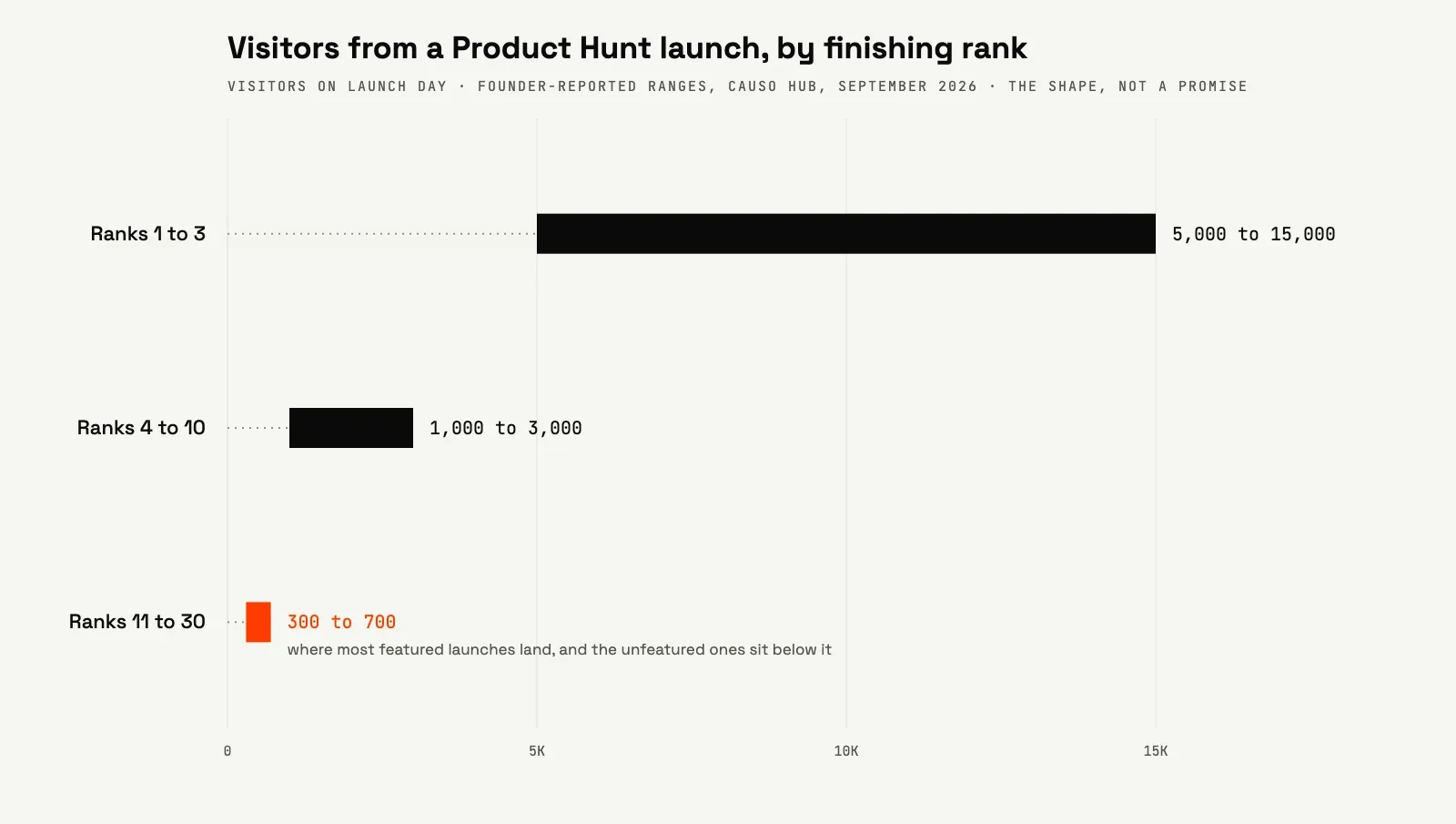
What does a featured launch send? Nobody has a dataset. The most careful founder-reported ranges, in Causo Hub's September 2026 guide, put the top three at 5,000 to 15,000 visitors, ranks four to ten at 1,000 to 3,000 and ranks eleven to thirty at 300 to 700.
It's steep, and most launches land on the flat part.
Before you book the day, write one sentence saying which criterion your product spikes on. If you can't, plan for the 300-visitor tier. Product Hunt vs The Board prices the two.
The twelve, in one table. Check each source; prices move about twice a year.
| Alternative | What listing costs | What it sends | Who it suits | Source, dated |
|---|---|---|---|---|
| Uneed | $14.99 fast-track, $29.99 to pick the date, $15 relaunch; the free line opens and closes | Claims 90,000 monthly visitors | Indie tools that want a bookable date | Uneed pricing, 6 and 12 Sep 2026 |
| Peerlist Launchpad | Free | 621 launches in one month, per Peerlist; no visitor figure | Developer tools whose maker has a profile | Peerlist help center, 6 Sep 2026; Peerlist on X, 2026 |
| Microlaunch | Free in the monthly batch; Pro $49, shown at $39 | Claims 25,000 unique visitors a month | Products that can wait and want the deal slot | Microlaunch and Premium, 6 Sep 2026 |
| Fazier | Free with a link back and a 30-day wait; Lite $29, Premium $49, Super $139 to $149 | None on the submit page | Founders who want a cheap date and a link | Fazier submit, 6 and 12 Sep 2026 |
| Dev Hunt | Free after about six months; $49 to skip | None from the site; one outside estimate of 2,000 a month | Developer tools with a repo | Dev Hunt on GitHub, 6 Sep 2026; LaunchDirectories, 5 Sep 2026 |
| Show HN | Free | 3,500 to 4,000 from an hour on the front page (2023); about 500 from a stalled run (2025) | Technical products with a demo and no signup | Show HN rules; marcotm.com, Jan 2024; Aidlab, Oct 2025 |
| Indie Hackers | Free | None published | Founders who post their revenue for months | Indie Hackers, 6 Sep 2026 |
| Reddit (r/SideProject, r/startups) | Free; a working product, a live link, no email gate | r/SideProject at about 790,000 subscribers; no per-post figure | Makers with a story who also comment | MediaFast, 2026; r/startups rules, 2026 |
| BetaList | Paid only; about $39, refunded if not selected | None published | Pre-launch startups collecting early adopters | BetaList support, 12 Sep 2026; Submitator, June 2026 |
| AppSumo | No fee; a negotiated share of every sale; about 10% accepted | Claims 1.5 million members; no per-deal figure | SaaS that can sell a lifetime plan | AppSumo for sellers and partner costs, 12 Sep 2026 |
| Tiny Startups | Weekly launchpad free; paid board from $49, rank 01 at $250 on 6 Sep | Claims a newsletter of 25,000; no visitor figure | Founders who want a permanent listing and a DR 71 link | Tiny Startups and Launch, 6 Sep 2026 |
| The Board | $1 to be on it; rank 01 is $1 over the holder; amounts reset when a season is won; every listing is a paid placement | No claim; views and clicks counted by Fathom, dashboard public | Brands that want a position they can price on a page they can audit | The Board and its Fathom dashboard, 6 Sep 2026 |
Twelve rows. Four will tell you what the page gets. One will let you check.
Uneed
Uneed is the launch board most founders reach for after Product Hunt, and its pricing page prints the numbers. Ninety thousand monthly visitors. A newsletter at 22,000 subscribers on 6 September and 26,000 on 12 September.
All of it is Uneed's own count. Nobody outside checks it.
The catch arrived on 17 August 2026, when Uneed closed the free waiting line because the wait had passed six months. The title says "again", and on 12 September the pricing page showed "Join the line" back, "at most 5 months out". A door that opens and shuts by the month is a paid door.
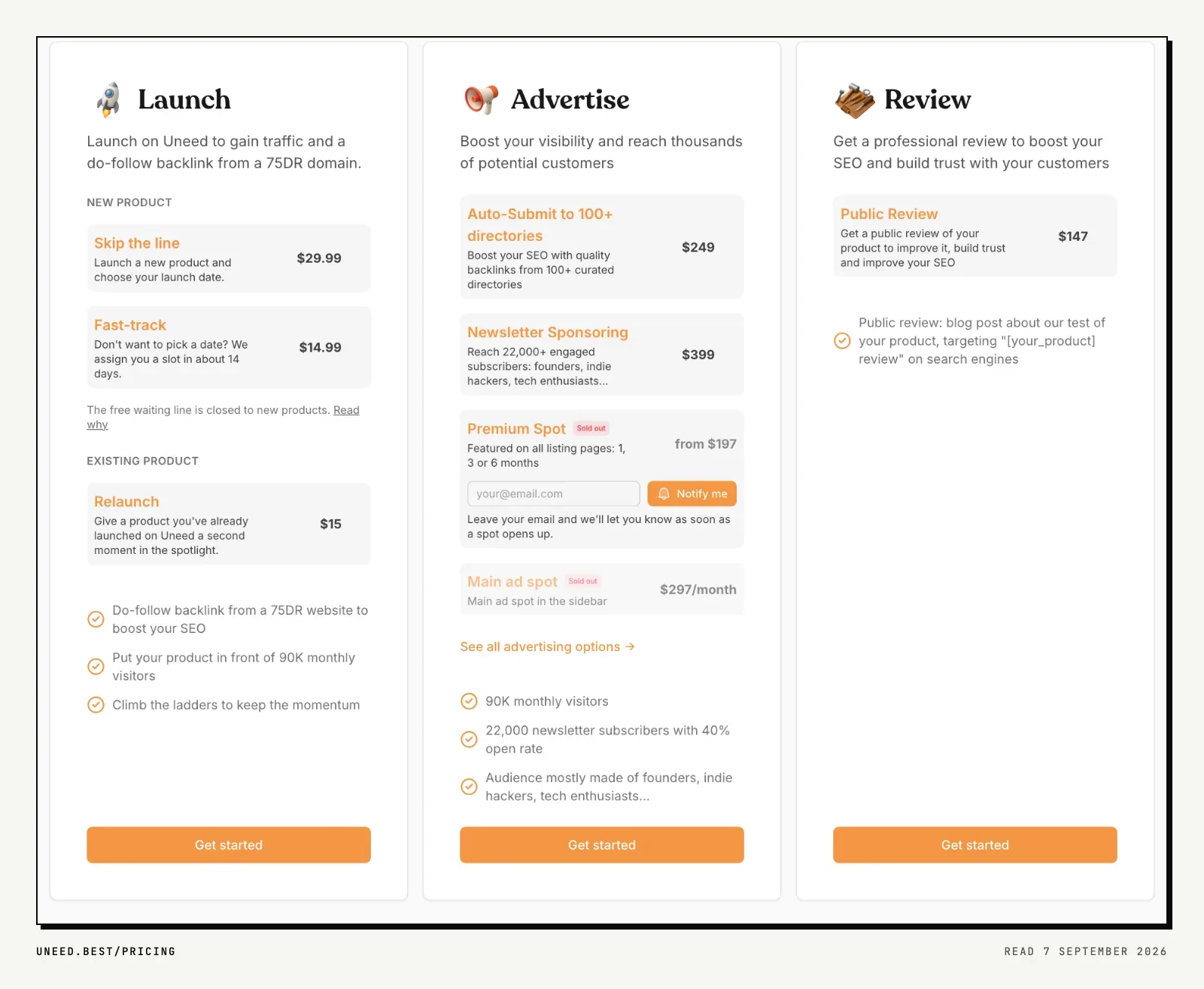
What's sold is a date; rank on the day is still voted. Fast-track is $14.99 for a slot about two weeks out, Skip the Line $29.99 to choose the day, a relaunch $15.
It suits an indie tool with a launch week to coordinate and a few dozen people who'll vote unasked. It wastes the fee for a brand with no maker behind it, since the vote decides the rank and no figure says what one day sends.
This week: buy Skip the Line at $29.99 and pick a Thursday. Decide on the $15 relaunch from your analytics on day three. Uneed vs The Board prices the two side by side.
Peerlist Launchpad
Peerlist Launchpad is free and it runs on a week. The help center says the window opens every Monday, and a November 2025 walkthrough notes the order is random for the first two days, so nobody buys the top with a Monday vote push.
No page quotes a fee for launching. What Peerlist sells is on its ads page, read 6 September 2026: a Featured Launch in its main feed from $29 a day, and weekly slots from $129 to $199. None of that is a rank.
The same page puts 58 percent of the audience in software engineering, Peerlist's own figure. Peerlist said on X that 621 projects launched there in one month.
That's twenty a day sharing one page.
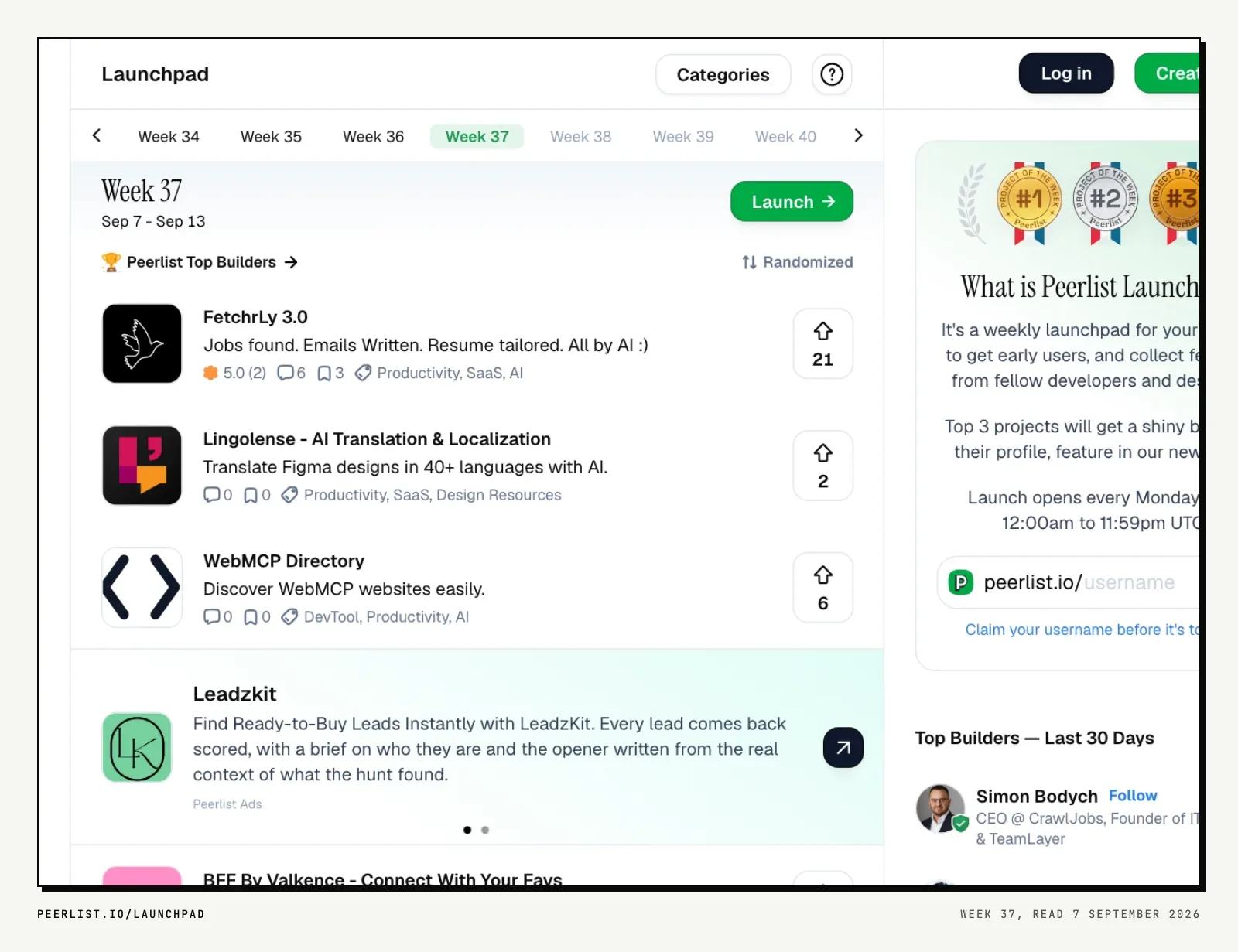
Only an individual with a Verified profile may launch, and agencies are barred by name, so it suits a developer tool whose maker already has a following. It wastes a week for a brand with nobody to stand behind it, and asking for upvotes gets the project removed.
The procedure:
- Verify your profile and mark the project complete.
- Submit on the Friday before the Monday you want.
- Answer every Monday comment inside the hour.
- Check your rank on Wednesday, when the random order ends.
Peerlist Launchpad vs The Board has the rest.
Microlaunch
Microlaunch has moved to a monthly batch. On 6 September the homepage showed 115 products queued for 26 September. Products rank over the whole month, on votes plus two scores out of five, one for the idea and one for the product.
How they combine isn't published.
The Premium page, read the same day, has two routes. Regular is free, with a wait the page itself puts at two to three months or longer, and no-follow links. Pro Launch is $49, shown that week as $39 with a code, capped at forty a month, and skips the queue with a verified badge and do-follow links. No refund policy appears anywhere.
The audience claim is 25,000 unique visitors a month, Microlaunch's own; the homepage counter read 973 a day, a different number over thirty days.
It suits a product that can wait for the batch and wants a month of feedback from other makers. It wastes $39 when what you wanted was a rank, because Pro buys features and the formula stays unpublished.
The verdict is one line. Pay the $39 only if your product can sell a deal, since the deals marketplace is the second surface it buys; otherwise join the free queue today and plan on December. Microlaunch vs The Board has the rest.
Fazier
Fazier will list you for nothing if you put its link on your homepage or footer and wait up to 30 days, and the free tier is featured on the home page "if selected".
On the submit page on 6 September 2026: Lite $29 (listed $39), a date you pick and no link back. Premium $49 (listed $69), fifteen days of promotion. Super read $149 on 6 September and $139 on 12 September, for the top of the home page for fifteen days. The number moves.
No page says how the day's order is decided. Listings show a vote count; fazier.com doesn't say.
Nor is there a visitor figure on it. The advertise page claims 950,000 visits, and the outside estimates cancel each other: Launch Directories put monthly traffic at 253 on 5 September 2026, LaunchPedia at 6,000. The same directory rates the domain at 83, which is the thing you're buying.
The worked cost: $29 buys a permanent page, a date and a link from a DR 83 domain, with reach unstated. Ask what you'd pay a stranger for one link like that. If it's under $29, take the free tier this week, put the badge in the footer, and decide on day 31 whether it stays. Fazier vs The Board has the tier table.
Dev Hunt
Dev Hunt is for developer tools and nothing else. It's open source, and its repo shows listings and votes running through a GitHub or Google login, which keeps the vote honest and the audience small. A launch week runs Tuesday to Monday.
The price is on the story page, read 6 September 2026. A free launch is queued and the average wait is six months; Skip the queue is $49 for any week. The code, last committed 28 August 2026, shows the rule: a week is free while it holds fewer than fifteen tools and $49 once it does.
Every package can be refunded until it's activated by hand. Almost no launch site offers a refund path at all.
No traffic figure comes from the site. One outside directory estimates 2,000 monthly visitors, on 5 September 2026, and lists a paid expedite the site doesn't advertise.
The verdict is short. If your product has a README, list it. If it has a pricing page and no repo, $49 buys a week in front of people who'll say so.
This week: submit to the free queue. If a launch next March is too late, pay the $49 and pick a Tuesday. Dev Hunt vs The Board has the rest.
Show HN
Show HN has the strictest rules on this list and the best documented upside. The post must be something people can try, "ideally without barriers such as signups or emails".
It costs nothing and sells nothing. The post is live at once, rank is points over time, and asking anybody for an upvote gets the post penalized or the account banned.
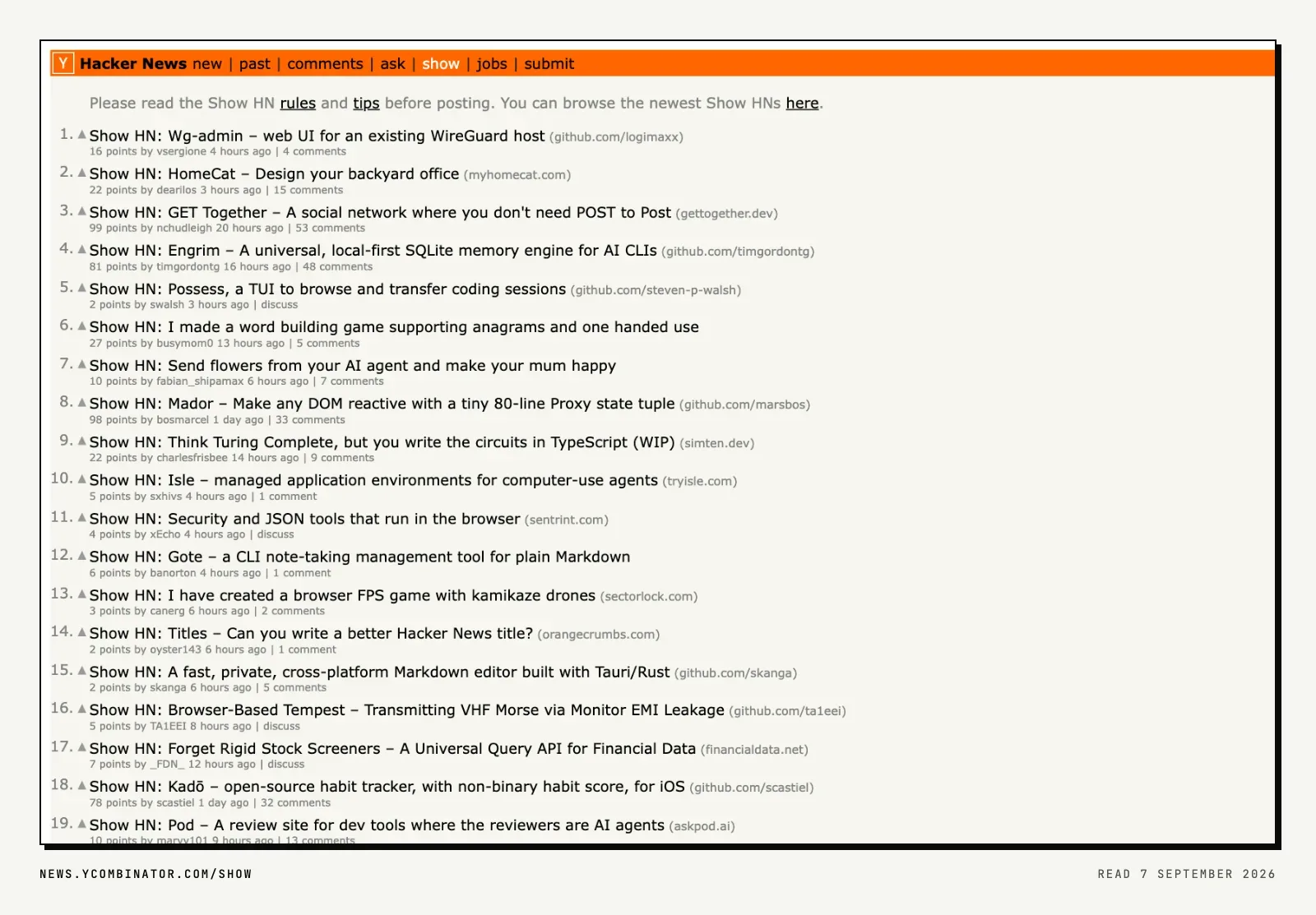
The numbers, when it works, vary by an order of magnitude. One founder logged 3,500 to 4,000 visitors from about an hour on the front page in March 2023 and nearly 8,000 over four days. When it half-works, it looks like Aidlab's October 2025 postmortem: about 500 unique visitors, no direct conversions.
Hacker News itself publishes no figure.
It suits a technical product with a demo and a maker who can talk about it for a day. It wastes the day for a brand with a coming-soon page, which gets flagged, and the front page is gone in hours.
The procedure:
- Put the demo behind no signup, or don't post.
- Post on a weekday morning you can spend six hours in the thread.
- Answer the harshest comment first.
- Read your analytics on day four.
Show HN vs The Board has the rest.
Indie Hackers
Indie Hackers is free, and it's the slowest thing here by design. There's a products directory where a product lists its revenue, self-reported or Stripe-verified, and a daily Build Board ranked by upvotes. Neither will spike your chart.
There is no paid listing. IH+ is $198 a year, read 6 September 2026, for the articles and posting from day one. The paid route to attention is the newsletter, sold through marketplaces: a full section was $1,099 a send on Passionfroot the same day.
What it reaches is not on its own pages. The marketplaces say 230K or 276K subscribers, depending which you read.
The rule came from the official account in February 2025: don't lazily advertise your product, the AI will catch it and keep it off the Build Board. What works is a build story with the revenue in it, for months. A first post that says "we launched" is a stranger asking for a favor.
It suits a founder who will show numbers and answer questions. It wastes a brand's effort, because the filter removes anything that reads as a placement.
This week: create the product page and write one update with a real figure in it, eight weeks before launch. Indie Hackers vs The Board sets a community against a paid board.
Reddit is two different places. r/SideProject, at roughly 790,000 subscribers in 2026, allows self-promotion in show-and-tell form: a working product with real screenshots, a live link and no email gate. The mods read your history first.
r/startups sends every promotional post to a weekly thread and removes the rest.
Both are free. Neither publishes what a post sends; 790,000 is a ceiling on who could see it and says nothing about who will.
The old rule still costs people: a tenth of what you post, at most, should be your own, and on r/SideProject it's enforced by people who count. An account with one link and no comments reads as spam because it is.
It suits anything with screenshots and a story, from a maker who also comments on other people's work. It wastes the post for an account created this week, or a product that asks for an email before it shows anything.
The procedure:
- Two weeks out, comment on five projects a day without linking yours.
- Write the post as a build story: what you tried, what broke, one screenshot per turn.
- Put the link at the bottom, with
?utm_source=redditon it. - For r/startups, wait for the weekly thread and post there once.
Nothing to pay. Two weeks of reading first.
BetaList
BetaList is for a product that's not finished. Its support page, read again on 12 September 2026, is blunt: "All submissions are paid. There is no free submission option." It used to be free. It isn't now.
You need your own domain, and a vercel.app address or an app store link is refused. If you're not selected, the refund is automatic and full.
The price is on the form, not the site. Submitator read it at about $39 in June 2026.
No audience figure is published anywhere on betalist.com. What you're buying is a day near the top of a list read by people who sign up for things in beta.
It suits a startup with a landing page and a product that's months away. That's the one list here where being early is the point.
It wastes $39 twice over for a product that's live and selling. The readers want to be first, not to buy, and the selection is editorial, so a curator decides after you've paid. The refund softens the rejection. It doesn't shorten the wait to hear.
The verdict is a line. Submit the week your landing page is up and nothing else is, and not after launch. BetaList vs The Board has the two side by side.
AppSumo
AppSumo has no listing fee and never did. The partner costs page, read 12 September 2026, says "we have no listing fees or limits on our platform" and "we only take commissions on sales you make." The share is negotiated per deal, the page names no percentage, and refunds come off your sales total first.
The seller site, same day, claims a community of 1.5 million, $113 million paid to partners and about a 10 percent acceptance rate. All of it is AppSumo's own.
It isn't a launch board. It's a marketplace, and the listing is a lifetime deal at a discount with AppSumo's share off the top.
It suits a SaaS with a fixed cost per customer that wants cash this quarter. It wastes years for a product with a per-seat price you plan to raise, because every lifetime customer is a discount you'll be honoring in 2030.
The worked cost is yours to run. Take your monthly price, multiply by the months a customer stays, and set it beside the lifetime price you'd offer, less the share. If the lifetime price is under a year of billing, the deal costs you every customer who'd have stayed longer.
This week: run that sum. Apply only if it holds, and expect the answer nine in ten applicants get.
The Two That Rank by What You Paid
Two of the twelve drop the vote and rank by what you paid. Read the small print on both.
One is Tiny Startups, next. The other is The Board, which is ours, so here is the disclosure in the same breath: every listing on it is a paid placement, rank is the amount paid and nothing else, and nothing on it is editorial or chosen on merit.
A listing starts at $1. Taking rank 01 costs $1 more than the holder paid. Amounts rise until somebody wins the season by holding the top for 30 days; then the standings are recorded and every amount resets to zero. Anyone can pay to sabotage a listing or protect it, in four timed kinds that never touch rank, or back one in public.
It doesn't print a "what it sends" number. Fathom counts the page views and every outbound click, the dashboard is public, and if the number there doesn't justify the position you want, don't buy the position.
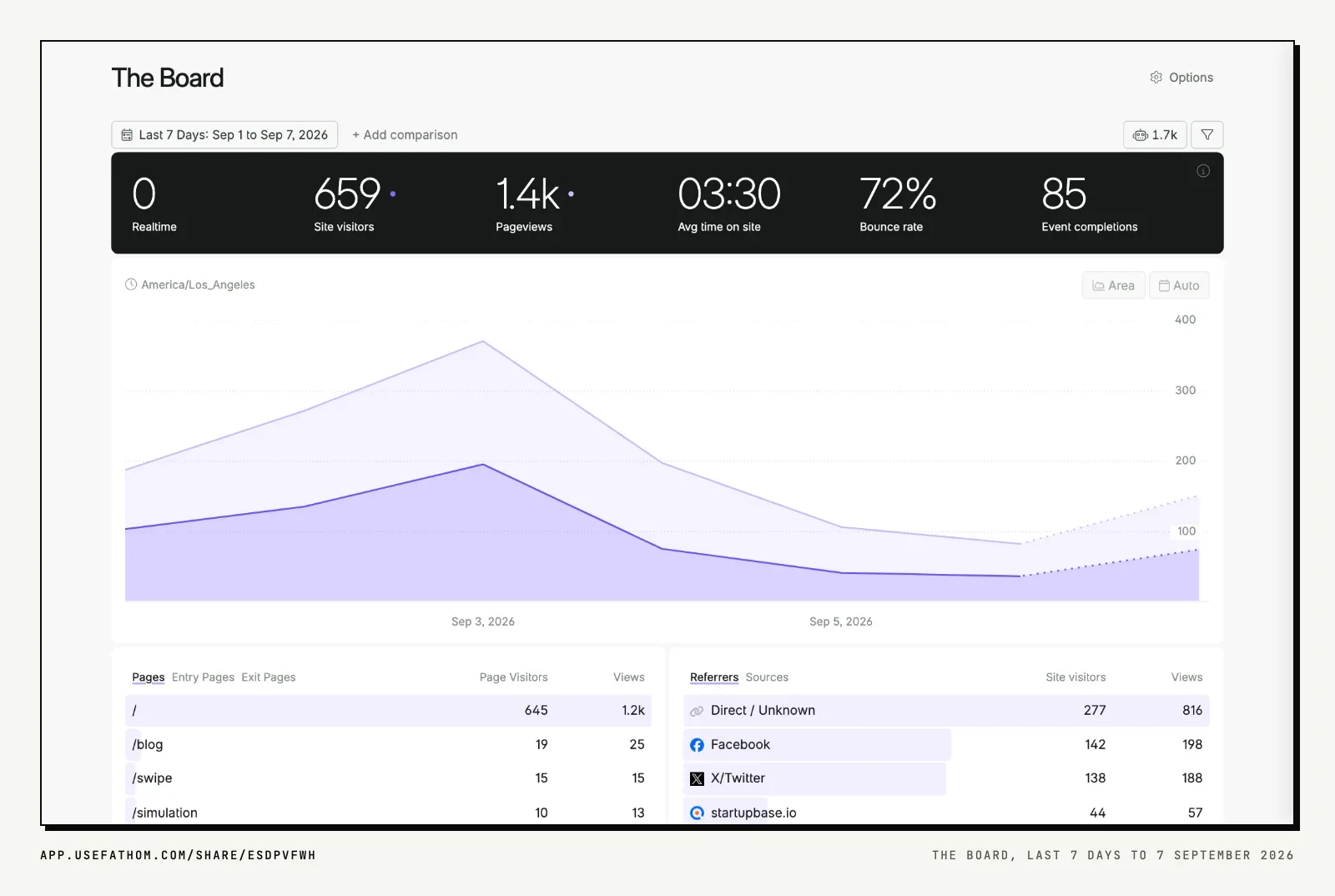
A $49 permanent listing with a strong link belongs beside the startup directories worth submitting to. A $1 position on a board that resets is a bet on being watched, and belongs with the other places to advertise a startup where the reach can be checked.
$206takes the top spot right now, from Citybound.
Claim a spotYour logo, your line, your link. Rank is decided by money and nothing else.
Tiny Startups
Tiny Startups runs two boards at one address. The homepage is the Spotlight: pay what you want from $49, and "the more you pay, the higher you rank", every amount printed beside its listing. On 6 September 2026 the top read $250 and the page offered $260 to pass it.
Ten dollars over.
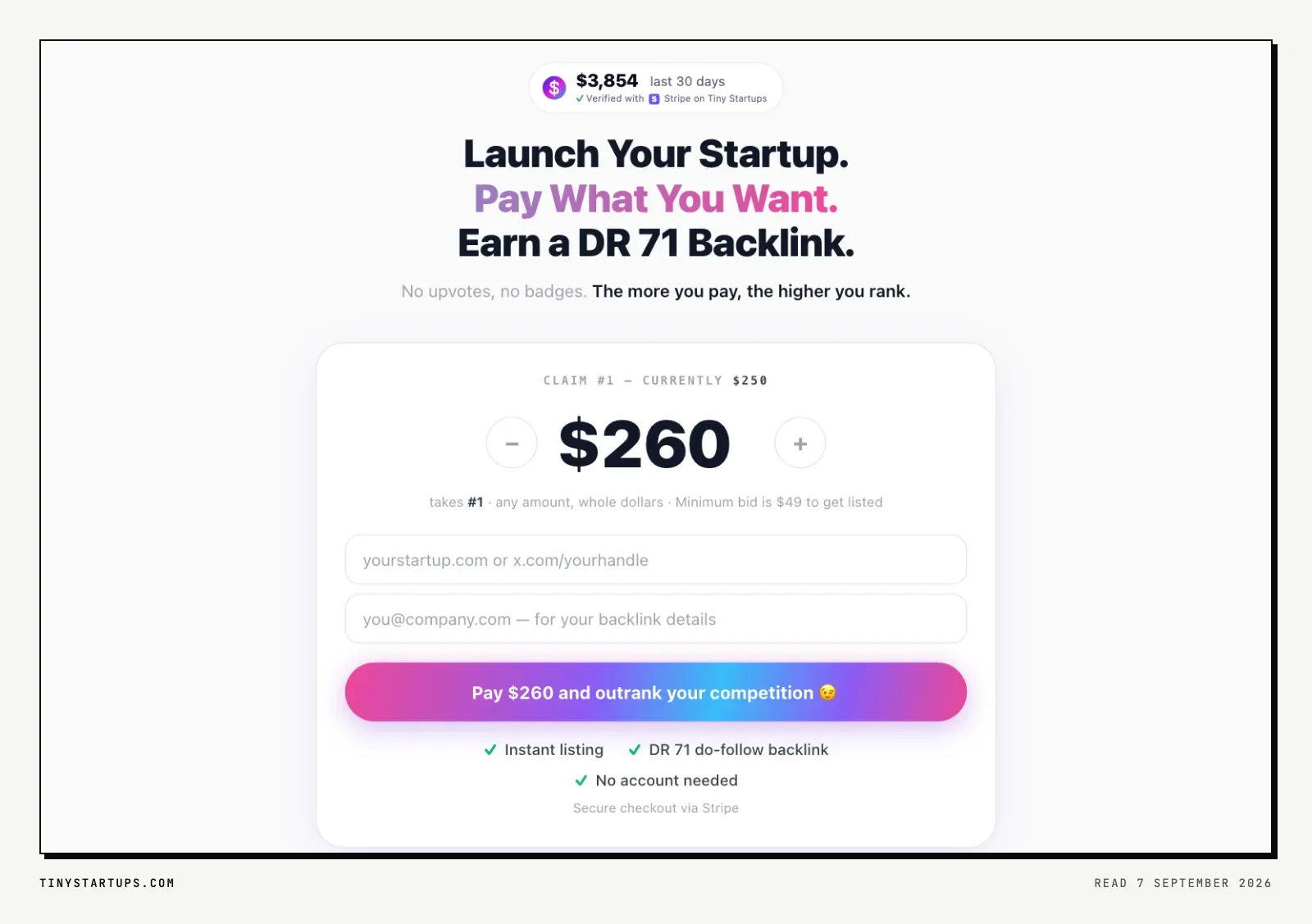
The launchpad is the older thing: a free weekly launch ranked by upvotes, with a lifetime listing page, after a review queue with no stated wait. Skip the queue is $29 on one page and $99 in the terms, effective 2 May 2026. All sales are final.
The newsletter claim is 20,000 on one page and 25,000 on another. No visitor count.
What the page doesn't say is how long a Spotlight spot lasts. No season, no reset, and nothing read on 6 September says whether $49 holds a place for a week or for good.
It suits a founder who wants a permanent listing and the link more than a launch day. It wastes money for one who wanted to be seen: the amounts are public and the reach isn't.
The worked cost: $49 buys the bottom of the ladder, $260 the top, for as long as nobody pays more. This week, submit to the free launchpad and read Tiny Startups vs The Board before you pay for the Spotlight.
Where the Money Goes Missing
Three failure modes cover most wasted launch budgets, and each has a name above.
The first is paying for placement on a page that won't say what it gets. Fazier, BetaList and Tiny Startups all sell one, and none publishes a visitor count. Price them as link buys.
The second is a paywall to be seen at all. Uneed's free line has closed twice; BetaList has been paid-only for a while. If a guide says either is free, the guide is older than the price.
The third is the gate that looks like a queue. Product Hunt's featuring and the "if selected" on Fazier and BetaList are a curator's call, made after you've done the work, and final.
There's a fourth, and it's about you. Every board records a spike that reads as success on the day and as nothing a week later, because the visitor from a leaderboard was hunting, not buying.
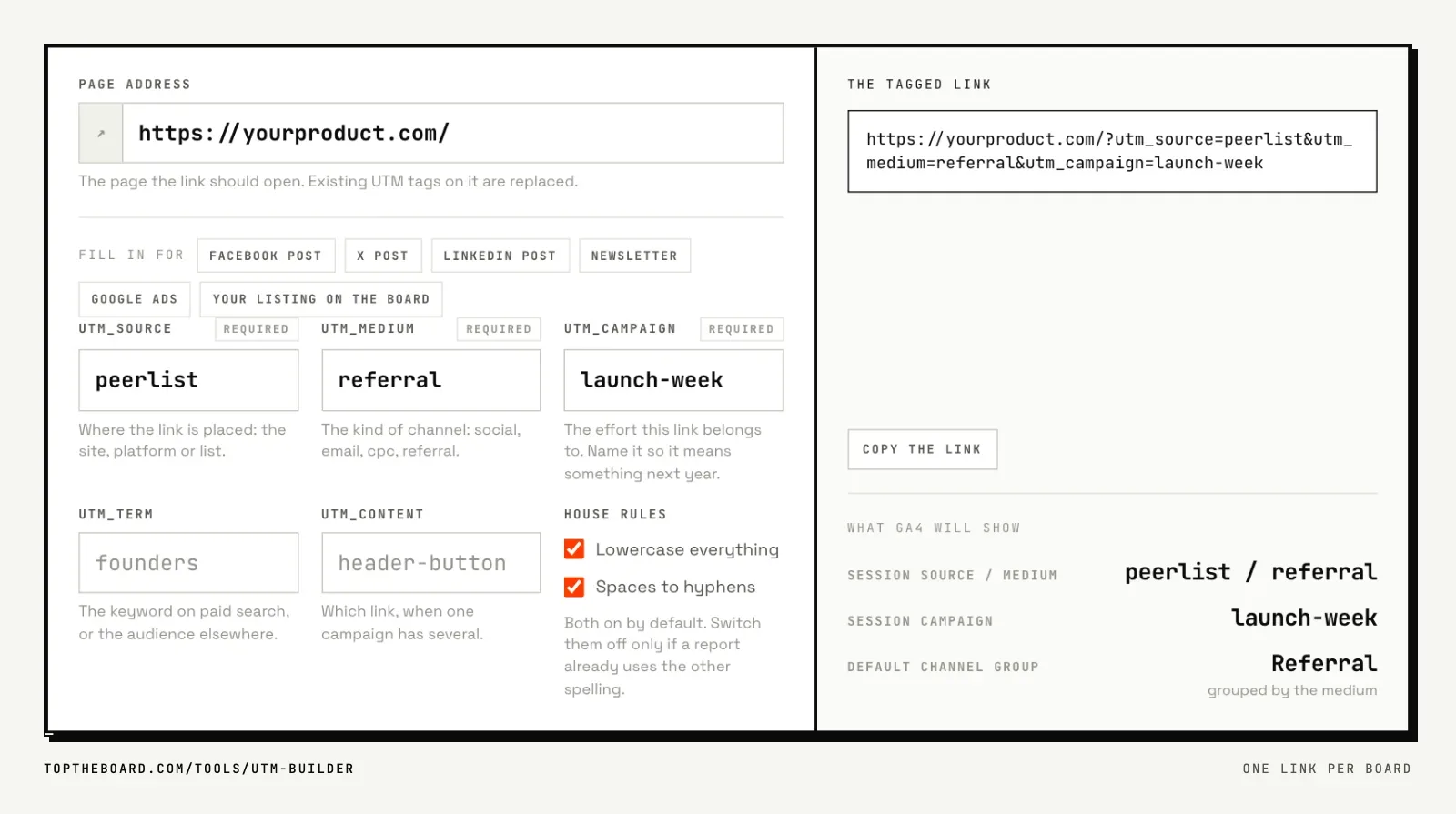
Put a UTM on every link before you submit anywhere; the UTM builder writes one in a minute. Judge each platform on day seven by signups, not by the graph on day one.
When Product Hunt Is Still the Right Day
None of this makes Product Hunt the wrong call. It makes it a specific one.
Launch there when you can name the featuring criterion your product spikes on and a hundred people who like you will show up unprompted. Consumer apps with a hook you can explain in a screenshot still do better there than anywhere on this list. A B2B tool with a per-seat price mostly doesn't.
Launch elsewhere when you can't say that. Run Peerlist on the Monday and Uneed on the Thursday of one week, for $29.99 and two mornings, and let the following Monday's analytics pick which one gets a second dollar.
For a bigger budget, the Alternatives shelf prices the paid channels the same way, and the post on cheap advertising for a small business picks up where the free boards run out.
Pay for reach you can count.
Everything else on the calendar is a hope with a date on it.