Hello World
The Board is live: a leaderboard of brands sorted by money, not an algorithm. Here's why it exists, who the villain is, and what changes now.
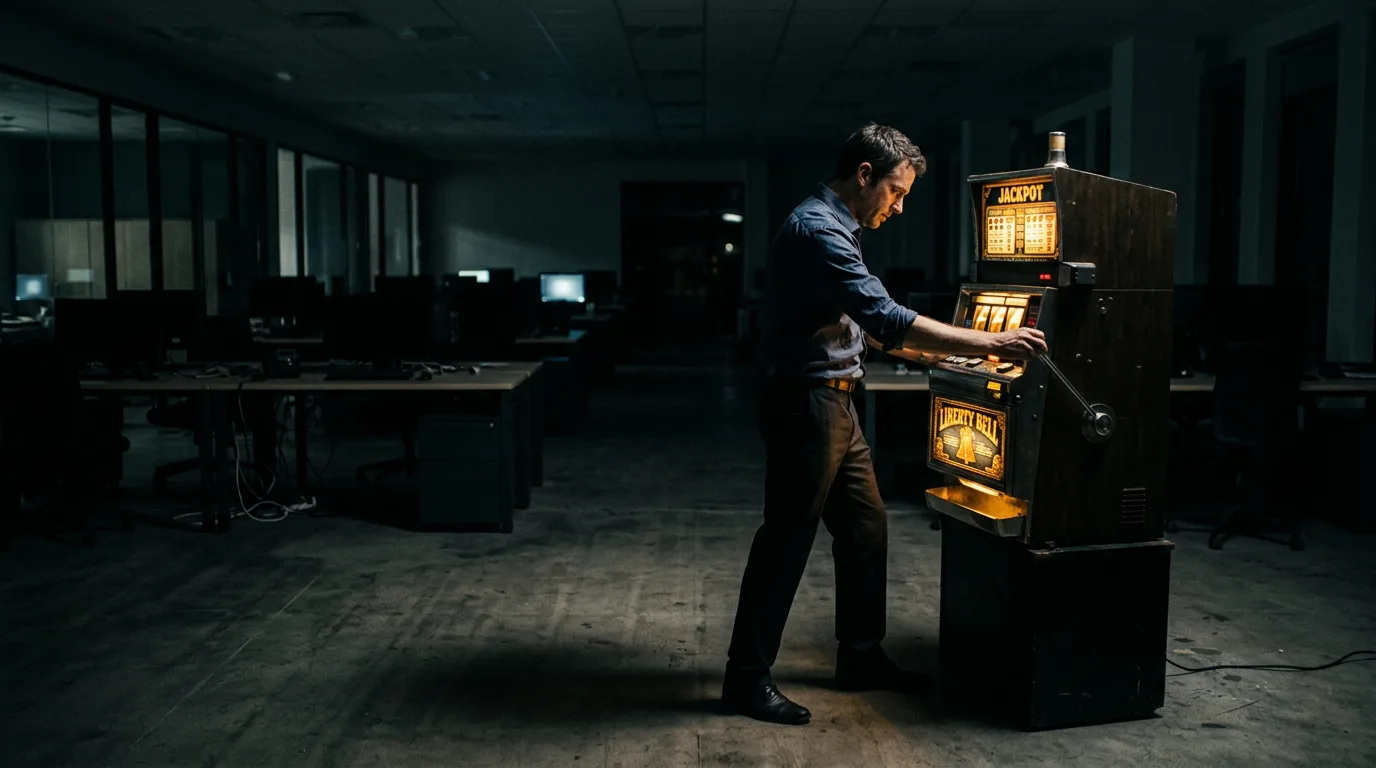
Somewhere right now, an algorithm you've never met is deciding whether anyone sees your product today.
It won't tell you why.
It won't tell you what changed since yesterday.
It'll just show up different tomorrow, and you'll spend the morning trying to reverse engineer a decision nobody actually made on purpose.
Your cost per click creeps up half a cent at a time. Three months later, you're paying double for the exact same audience. Nobody can point to the day it happened.
I've done this dance for years.
I've watched founders (good ones, with real products and real traction) pour five figures into a dashboard that speaks only in euphemisms.
Learning phase. Audience fatigue. Relevance score dropped.
None of it means anything you can act on. It just means: pay more, and maybe it gets better.
That's not a marketing strategy. That's a slot machine that only shows you the odds after you've already pulled the lever four hundred times.
Somewhere in there, you start negotiating with a chatbot that has never seen your product, hoping it takes pity on your account. That's not customer service. That's a confession that nobody at the company actually knows what's happening either.
I built Magai on the belief that AI should amplify what a person already knows how to do. It should never replace their judgment with a black box. The Board exists for the same reason, pointed at a different black box: the one that quietly decides who gets seen and who doesn't.
So here's the plain version. What we built, why it needed to exist, and what changes now if you're trying to get noticed without losing your mind.
The Algorithm Tax
Every platform that sells you reach charges a second fee on top of the one on your invoice. It never shows up as a line item, because it isn't paid in dollars. It's paid in time, in guesswork, and in a slowly eroding trust that the money you're spending is doing what anyone claims.
Call it the Algorithm Tax: the price of never being told why.
You pay it when you rewrite the same ad for the ninth time because the platform's mood shifted overnight. Nobody on either side of the screen can tell you why.
You pay it when you hire an agency whose entire value proposition is guessing at the pattern longer than you have.
You pay it every time you hit boost this post and hope fifty dollars does something you'll never be able to measure.
You pay it when a campaign that worked perfectly last month gets throttled this month. The only explanation you get is a support macro instead of an actual human being.
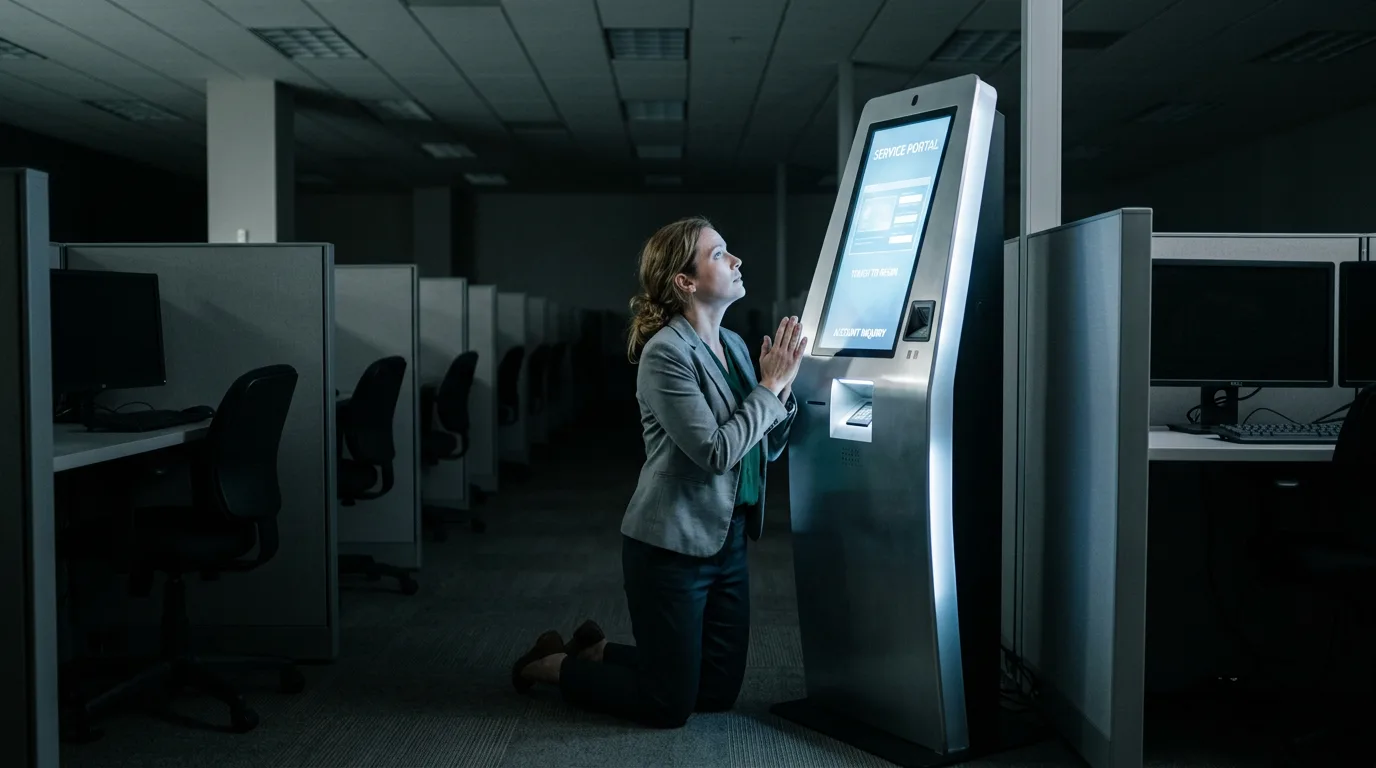
You pay it in the specific exhaustion of becoming a part-time expert in a system built by a company. That company changes the rules whenever it improves their numbers, not yours.
To be clear about something: this isn't a dig at anyone who's ever run a Google campaign or boosted a Facebook post. Most founders I know, including a much younger and more broke version of me, never had a better option.
You go where the eyeballs already are. For two decades, those eyeballs have lived behind an algorithm's velvet rope.
The problem was never that people were willing to pay for attention. Paying for attention is as old as the first sign nailed above the first shop door.
The problem is that the exchange rate has been secret the entire time, set by a company that profits every time you can't predict it.
We didn't write this site to complain about that industry. We wrote it because there's a difference between paying for attention and paying for a guess at whether attention shows up. The Board is built entirely around the first one, and what that honest price actually looks like across nine real channels is worth reading before you spend another dollar guessing.
Meet The Board
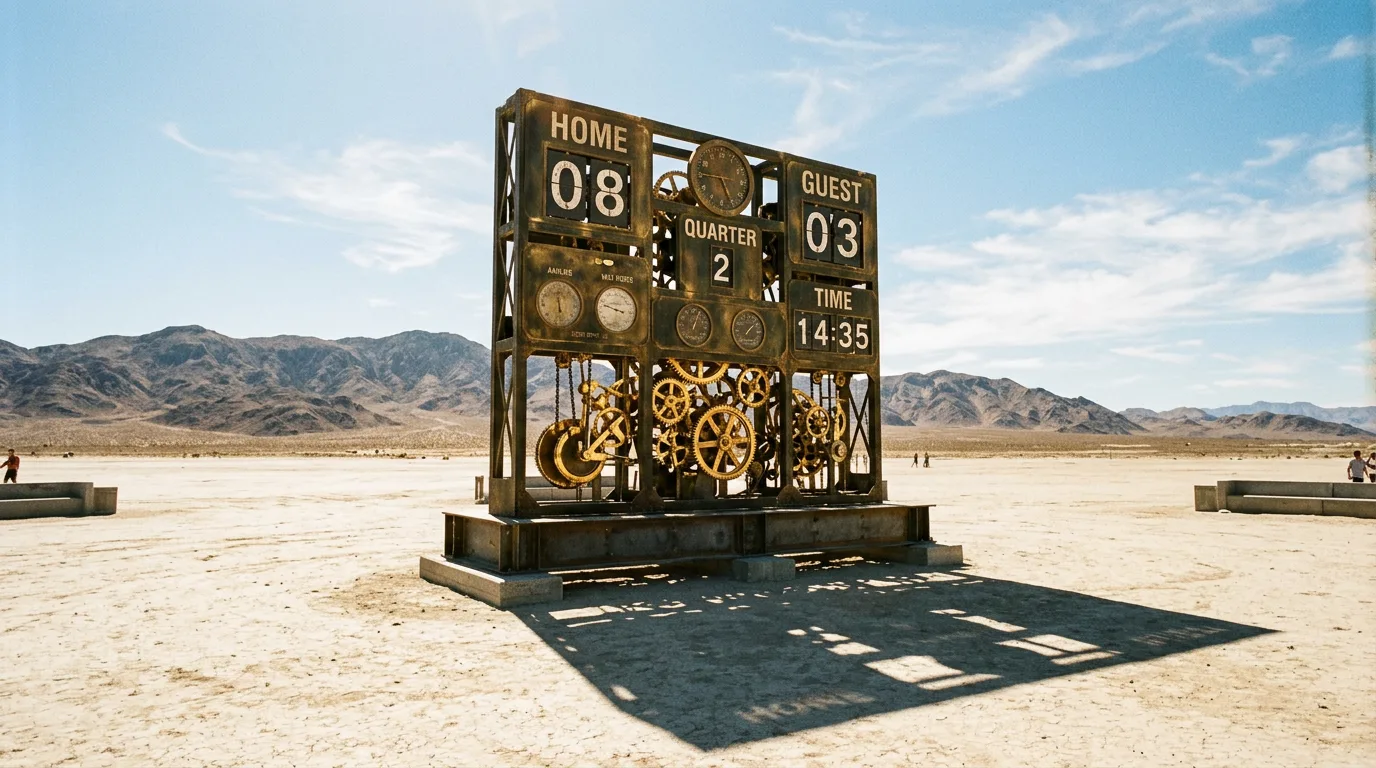
The Board is a leaderboard of brands, sorted by exactly one thing: how much each brand has paid to be seen.
That's the entire mechanic:
- No targeting settings to fight with.
- No relevance score judging your creative.
- No algorithm quietly deciding overnight that your product deserves less reach than it earned the day before.
That's the state of play right now, live, in front of everyone.
Every card carries a logo, a brand name, one line of copy, a category, and a link out to the actual product. Everything else is just packaging wrapped around that link, because the link is the only part of this that was ever the point.
Every single listing on this board, from the top spot down through the last row of the Field, is a paid placement. We're not hiding that behind six point gray text that says sponsored.
It's the entire premise, printed in the open, on purpose. We'd rather you distrust nothing about how this works than trust something you can't verify.
Rank Is Money. Nothing Else.
Higher rank means more people see your card and more people click through to you. That value exchange works the same for a bootstrapped app with forty users and for a company three years past its Series B. Nobody's rank comes with an asterisk.
Taking the top spot costs more than whoever held it paid, by at least a dollar.
Every time someone takes that spot, the floor rises, and it stays up there until somebody wins the season.
There's also a second board hiding inside the first one. It's called Today, and it resets every day, ranking brands purely by what they've added since the sun came up.
It exists so that a listing at rank ninety can still win something real this afternoon. That happens without ever touching anyone's actual rank or anyone's actual money.
The main board rewards commitment. Today rewards showing up.
How We're Rewriting the Rules of Attention
We didn't set out to build a friendlier ad platform. We set out to build something with no algorithm to please in the first place. You can't out-guess a system that changes its own rules without ever telling you it changed them.
Here's what that actually looks like once you're inside it.
- Your rank never drops because of anything except someone outspending you. Not a policy update. Not a mood swing in a data center three states away. Not a review process you'll never be shown.
- Your listing is free to edit, always, as many times as you want. The logo, the copy, the link out, all of it. Attention should reward the offer behind the link, not the paperwork wrapped around it.
- Every brand earns real credit just for existing here honestly: show up daily, verify a badge, bring in another real brand, share an actual milestone. Do enough of that, and staying protected never requires you to keep feeding a meter.
- If anyone ever vandalizes or sabotages a listing, the damage always expires on its own. Waiting it out is always free. Nobody can force you to spend a dollar defending something that already belongs to you.
Anyone Can Root For You
Every listing on The Board carries its own balance, called a war chest. It only holds money that other people put there.
You can't top up your own war chest. That's not an oversight. It's the entire point.
The only way it grows is if someone else decides your listing deserves backing. A customer. A fan. A competitor who respects the hustle.
They pay in. You decide how it gets spent: climbing rank, buying protection, or repairing damage.
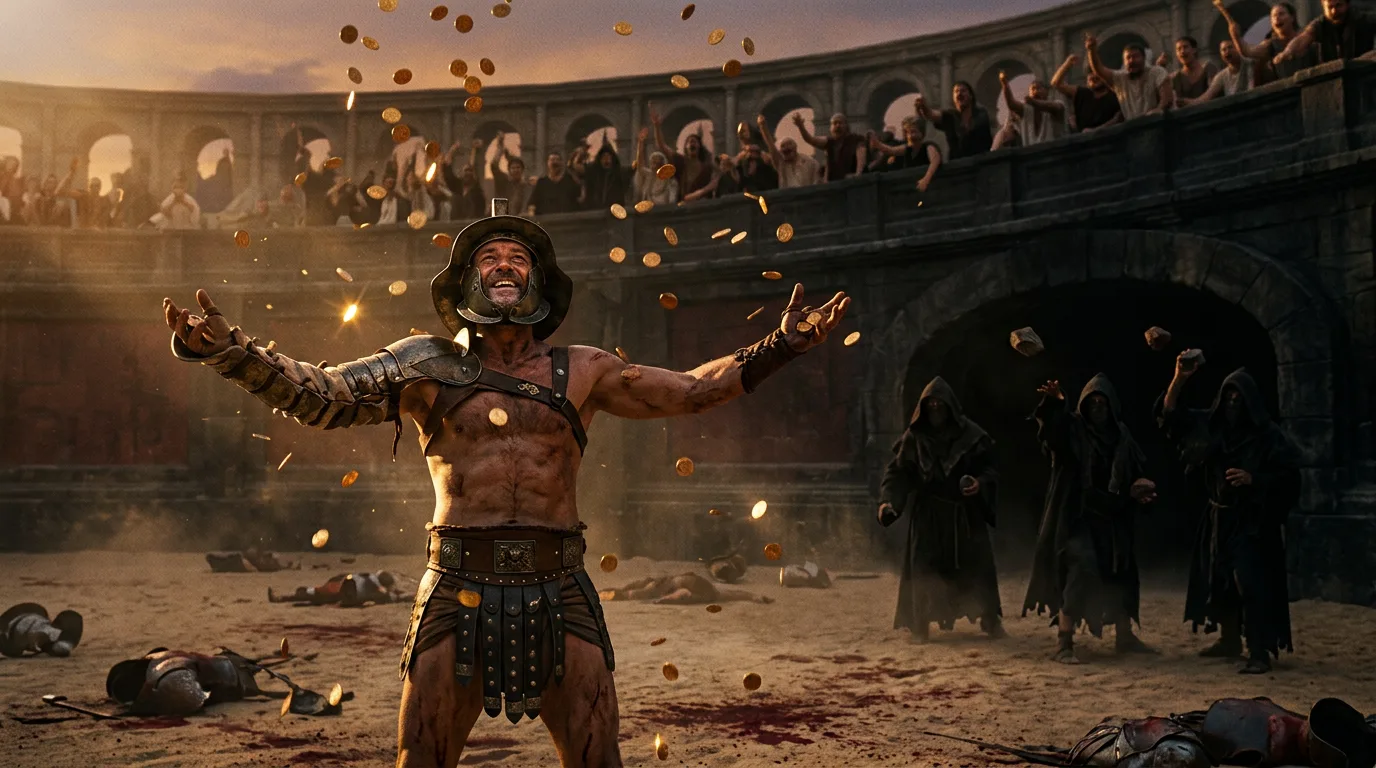
That single rule turns backed by into a sentence that actually means something. When a card shows real names behind it, that's not marketing copy. That's a list of people who put real money behind a real brand, printed where anyone can check it.
None of this removes competition. Rank still costs money, and whoever's willing to spend more will always outrank whoever isn't. We're not pretending that part goes away, and we'd be lying to you if we did.
What disappears is the fog. You always know exactly what you're buying, exactly what it costs, and exactly why the brand above you outranks you or doesn't. That knowledge used to be the product an entire industry sold back to you, one confusing dashboard at a time.
That's the whole revolution, honestly, in one sentence:
Attention, sold to the highest bidder, in full view of everyone.
The rules are printed where you can actually read them, instead of buried in a terms of service update nobody opens.
What This Changes If You're Building Something
If you're a solo founder shipping a side project at midnight, you don't need a media buyer or a tracking pixel. You don't need three weeks of split testing to get in front of real people. You need a product worth clicking on and a dollar amount you're willing to put behind it. That's the whole pitch you have to make, and it's only ever to yourself.
If you're a startup trying to show traction before your next round closes, a rank on a public, transparent leaderboard tells a story fast. An investor understands it in about four seconds. Compare that to explaining, we spent four thousand dollars on Meta and our CAC is complicated. That sentence has never convinced anyone of anything.
If you're running an established business, you already know the feeling. Your ad spend gets a little less efficient every quarter, and even your agency can't fully explain why.
Here's what predictable actually feels like:
- You pay an amount.
- You hold a rank.
- You get a reach that scales with that rank, for as long as nobody outpays you.
And here's what goes quiet:
- No creative fatigue.
- No policy review.
- No 2am panic about why the numbers moved.
Across every version of that story, the headache that disappears is the same one. You stop needing to become an amateur expert in a system designed to stay just outside your understanding. That confusion has always been profitable for somebody else, on purpose.
You need to know your product is worth showing to people, and be willing to say so with a number instead of a targeting spreadsheet.
None of this works if the product behind the link is hollow. The Board makes attention honest.
The Board can't make a bad product good. That part is still entirely up to you, same as it's always been.

Hello, World
Every piece of software worth building starts with a program that does almost nothing, just to prove the thing is alive.
Consider this that program.
The Board is live. This is the lowest the floor has been since the last time a season reset it, and it only rises from here until somebody wins this one.
This isn't a bet on some future version of the internet. It's live, today, and the first names on it are already locked into their rank.
We built this because attention shouldn't require a translator. The people building real things deserve an honest price for being seen, not a black box that charges them for the privilege of guessing.
Go claim your rank. Watch the number move. Bring someone else onto the board with you, and let them watch it move too.
The algorithm was never the only way to get noticed. It was just the only way anyone had bothered to build.
Not anymore.